
How Georgia State Patrol arrests are recorded
The Georgia Department of Public Safety sits over the Georgia State Patrol. Its official division page names GSP as the state patrol agency. The separate troop and post directory spreads 52 posts across nine troops. These are lettered A through I. That reach covers all of Georgia. It still does not make GSP a jail operator. An arrest report can be filed under the trooper, the troop, the post, or the receiving county. So the record you want shapes where you look.
Traffic work dominates public GSP reporting. Crashes, DUI enforcement, pursuits, warrants, and specialized operations all get documented too. Some stops lead to a county jail booking. Others end with a citation, a release, or a transfer. The arresting agency and the holding agency are often different. Need the booking entry and any roster photo? Start with the county or local detention custodian.
The DPS Georgia State Patrol division page confirms the agency name used here. Knowing the post that handled an event helps narrow a search. The page itself is not a full arrest lookup system.
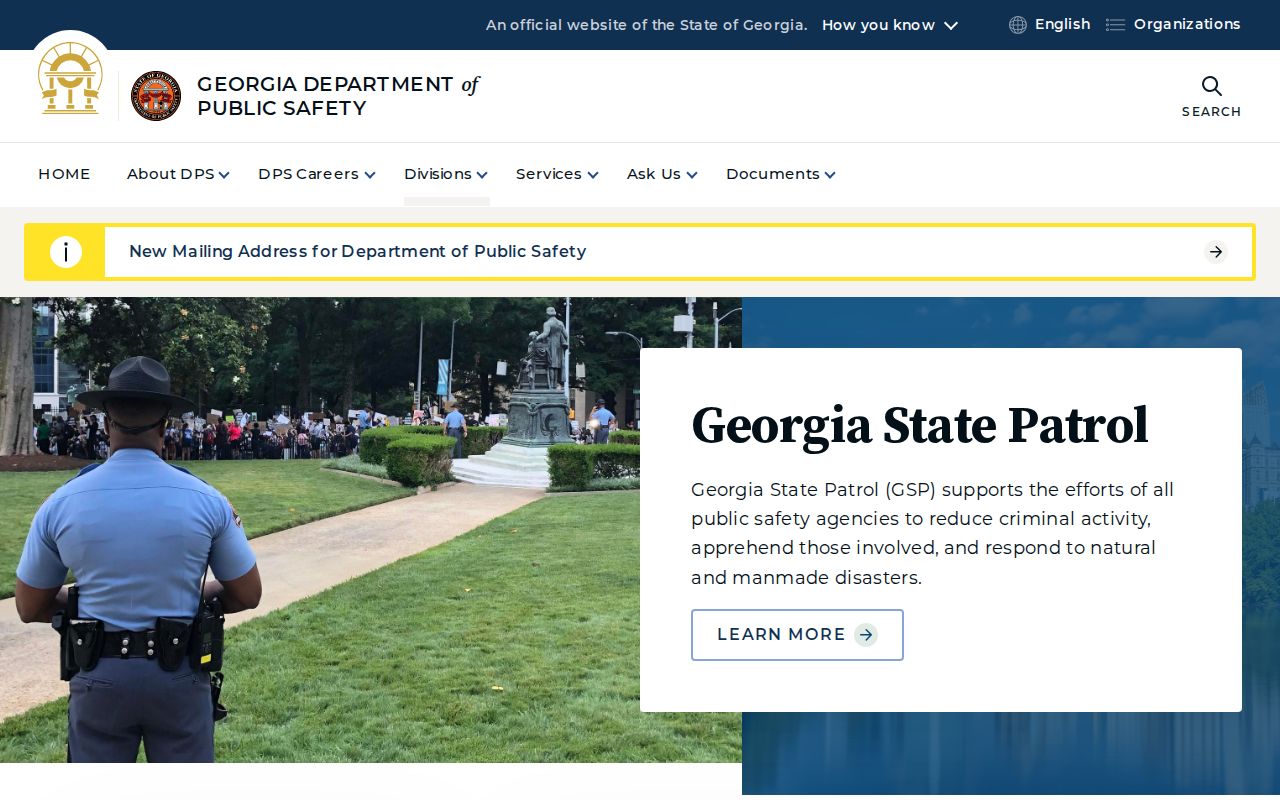
The division screen places GSP inside DPS. To pin down a booking, pair the agency name with the incident date and the receiving county.
Where Georgia State Patrol arrest news appears
For official news, the DPS press-release index is the steadiest source. It carries selected GSP arrests and enforcement events. Coverage is event-driven, though. A release is a public announcement. It is not a daily booking roster and not a list of every person a trooper arrested. DPS tends to highlight serious crashes, pursuits, fatal events, investigations, or public-safety campaigns.
A release may name the arrested person and the agencies involved. The detail varies with whatever DPS chose to announce. Dates and headlines tie each statement to its incident. They cannot tell you whether the person remains in custody. How the court ruled later stays outside the release too. The official DPS release index shows selected news, not every GSP arrest.
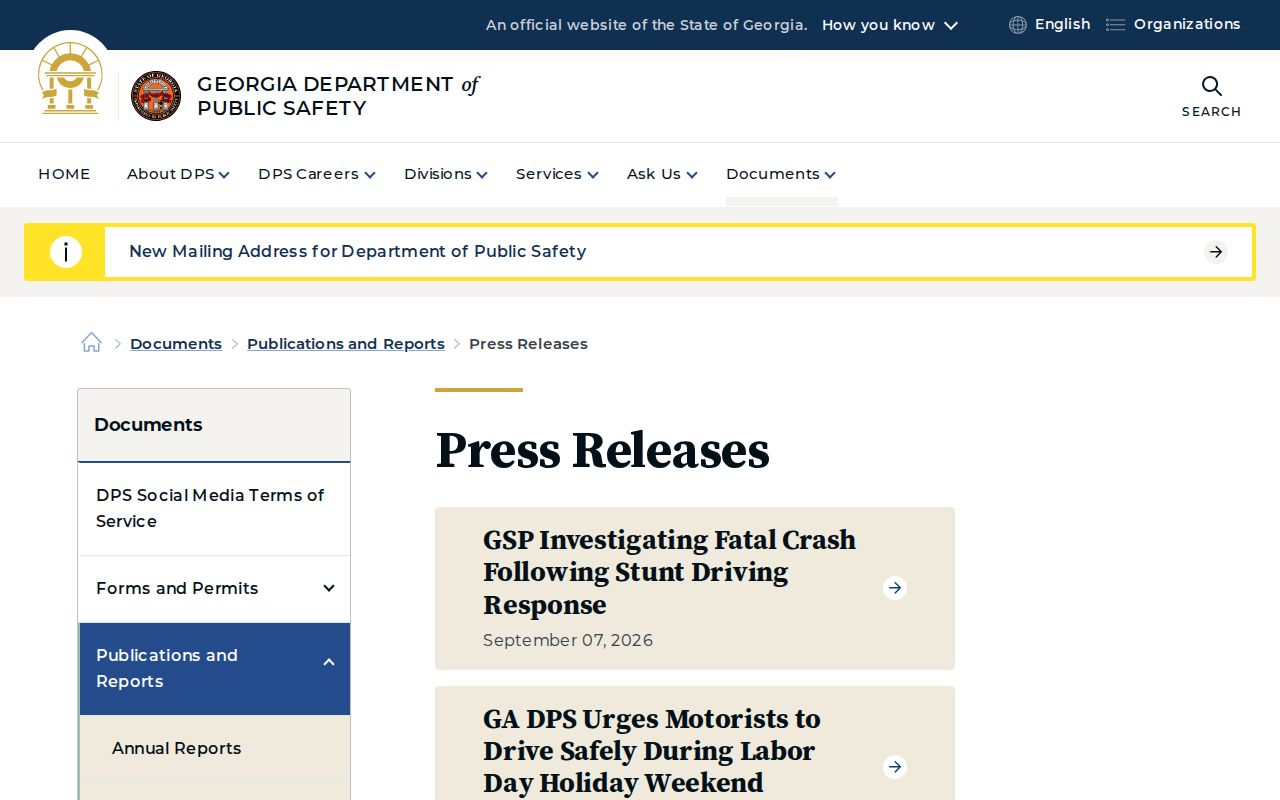
Match each item's date and headline to its event. A missing name proves nothing about whether an arrest happened. A listed arrest says nothing about custody status.
| Official channel | What it can show | How to read it |
|---|---|---|
| DPS press releases | Selected GSP arrests, pursuits, crashes, and agency announcements. | Event-driven; not a daily booking list. |
| Campaign reports | Aggregate activity during a named travel or enforcement period. | Dated totals, not a live counter or list of people. |
| DPS annual reports | Year-level agency and program activity. | Useful context, not person-level arrest records. |
| GSP specialist pages | Program descriptions, including DUI teams and focused assignments. | Explains the work, not a current arrest feed. |
| Post blotter policy and reports route | How GSP handles station activity records and public requests. | Request a specific record; do not assume a public web log exists. |
Note: DPS announcements and local jail displays serve different purposes, so use whichever publishing agency holds the record you need.
Why no daily GSP arrest roster is listed
DPS publishes no daily GSP arrest or dispatch log on a public page. Press releases, annual reports, specialized-unit pages, and social posts are real channels. None is a complete booking feed. The department's social-media terms spell out their own limits too. A post can flag an event. It should not stand in for the county record or a records response.
The DPS post-blotter policy treats post blotters as permanent records of station activity. Permanent record series do not guarantee a searchable public webpage for every post. If a station entry is not online, there is a next step. Send a focused request to DPS. Ask whether the record exists. Ask whether any part is withheld, and whether a fee estimate applies.
The gap matters most for one specific event rather than general news. Build the request around a narrow time span. Include the incident date, county, troop or post, and the type of report. DPS can say whether it holds the record. It can also say whether the receiving county owns the question.
How to trace a GSP arrest to the booking record
Begin with the announcement only if one exists. Then go to the detention agency that accepted the person. A GSP release may name a county or partner agency, but the sheriff or local jail often holds the booking record, not DPS. The Georgia County Directory routes you to the local sites for each county's roster and records contacts.
- Search the DPS press-release index by the event date, a known name, or a distinctive incident detail. Read the full item and note which agency is named as the arresting or receiving agency.
- Identify the county where the person was taken after the arrest. If the release does not say, use known incident details to narrow the likely receiving jurisdiction, then confirm it with the appropriate custodian.
- Check that county’s official jail or sheriff roster for current custody. A new arrest may not appear at once, a released person may no longer appear, and a roster may show only fields the county chooses to publish.
- If the roster has no matching entry, ask the county records unit whether it holds a booking record. If the question concerns the trooper’s report or station activity, send a separate DPS Open Records request.
Chasing a same-day arrest? The statewide Arrested Today page explains why county feeds differ in windows and posting times. That routing beats treating a press release as a list of everyone GSP booked.
Where a Georgia State Patrol arrestee is booked
GSP patrols and makes arrests; it does not run a statewide county jail roster. After an arrest, the receiving agency and the circumstances determine where the person is booked. Often that means a county or local detention facility in the area, whose staff creates or holds the booking entry. There is no guarantee that every traffic stop leads to jail, that the person stays in the arrest county, or that a photo appears in a public view.
A person may be cited and released, transferred, held elsewhere, or omitted from a public display under a law or policy. A roster changes with custody, while the county may retain the booking record after release. A court docket answers the case-outcome question, not current custody.
Booked where? Start with the county that received the person, not with a statewide GSP roster. A booking entry is a point-in-time record, and charges can change or disappear later.
Need a post-sentencing custody check? The Georgia Department of Corrections Find an Offender search tracks people in state prison, not fresh GSP arrests or county bookings.
How to request a Georgia State Patrol arrest report
Report requests go through the DPS Open Records Unit. The online EPORTS portal is the main route, backed by the unit's published contact channel. EPORTS covers citations, incident reports, and crash reports. Other DPS records? Contact the unit directly. The DPS Open Records Unit page lays out the full path when a report is missing from the newsroom or a public log.
Georgia's Open Records Act, O.C.G.A. §§ 50-18-70 through 50-18-77, generally requires a response within three business days. The Attorney General's Open Records request guide walks through the statewide process. A response might deliver records, cite an exemption, or give a time and cost estimate. A pending investigation does not make an initial arrest report automatically secret, though protected details can be redacted and other exceptions may apply.
One more thing. Pick a single submission path for each request. DPS warns that duplicate channels can trigger duplicate responses and duplicate charges.
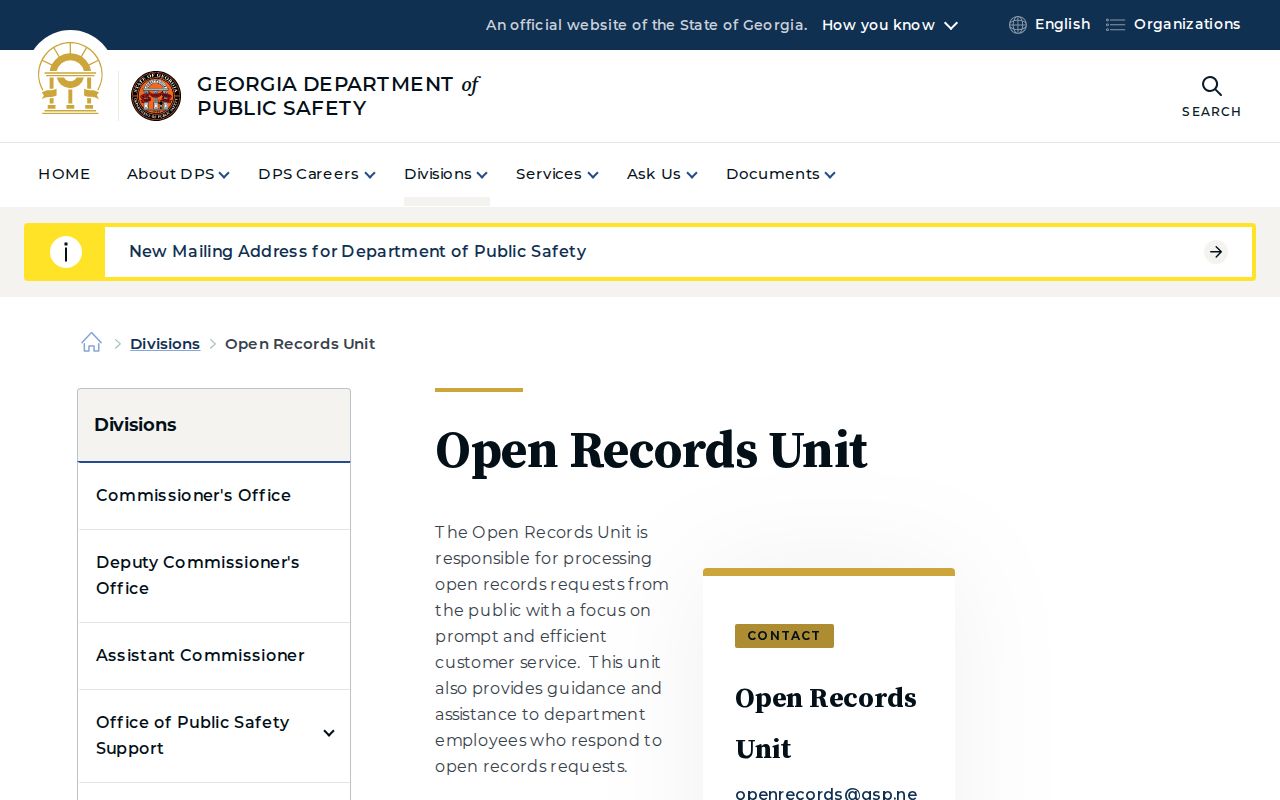
The screenshot lays out the route into a DPS report request. The agency's current fee chart sets what responsive records and production work cost. Paying a fee never promises a given report or photo exists.
- Use the DPS Open Records Unit page to choose EPORTS or the unit’s contact method. Do not send the same request through several channels.
- Name the record type and narrow the date range. Include the incident date, county, known troop or post, and a report or citation number if available.
- Ask for an existing record, such as an incident report, citation, or post activity entry. An agency need not build a new statewide arrest database for the request.
- Review the response for any cited exemption, redaction, time estimate, or fee estimate. Reply in time if DPS asks you to approve a cost.
- If the request concerns the jail booking rather than the trooper’s report, direct it to the receiving county custodian instead.
Note: A DPS response covers only records the department holds, and says nothing about the later court result or current custody status.
Georgia DPS arrest report fees and estimates
The DPS charging chart lists the examples below. Amounts and procedures can change, so confirm the live chart before paying. Fees cover search, copying, and production work. Paying one never guarantees a record or image can be released.
| Record type | DPS chart example | Limit |
|---|---|---|
| Crash report | $5 each | Use EPORTS when available. |
| Incident or unusual-occurrence report | $2 each | Release may involve redactions. |
| Warrant | $2 each | A copy is not a live warrant check. |
| Photo set | $5 per set | Availability and § 35-1-19 limits still apply. |
| Citation | First EPORTS citation at no charge; $1 for each additional citation | The chart describes citation requests, not a statewide case search. |
| Video or dashcam download | $10 for download | Media, device, or delivery costs may be added. |
| Search and paper production | First 15 minutes free; certain pages up to $0.25 each | Other records may have a separate calculation. |
Estimates over $25 pause production until the requester agrees. No consent within two weeks, and the file closes. A new request is then needed. DPS says estimates above $500 require advance payment, and the current chart controls if those figures or steps change.
What GSP DUI and campaign reports cover
Not every GSP arrest activity shows up as an individual release. Some appears as a defined enforcement program. The Nighthawks DUI Task Force page describes its North, Middle, and South teams. It explains how this specialized patrol work is structured. It does not name who each team stopped or arrested.
Campaign reports give a time-bounded view. DPS's 2026 Memorial Day travel-period release counts stops, DUI arrests, crashes, injuries, and fatalities. The totals cover that named stretch of days. It is a dated summary, never a running total. Hunting for one person still means the county booking route or a focused records request.
The 2024 DPS annual report adds broader activity and program context. Aggregate totals are great for agency-level patterns. But they cannot identify a particular arrest. Pair any broad report with the event record and the eventual court disposition.
How to read a GSP arrest report
Keep the public statement and the legal case separate. A GSP news release summarizes what investigators allege about an event, and an initial report captures what was known early on. Later filings can add, narrow, or dismiss charges. While tracing an arrest record, hold the arresting agency, the receiving county, and the court location apart.
A county roster shows current custody. Its booking file can persist after release. The court docket records later proceedings, and a disposition, the court's outcome, may differ from the first charge in a release. Confirm outcomes with the court. State-prison custody lives in GDC records, not a county arrest feed.