
Georgia Recent Arrests
Georgia has no single statewide booking search. Each county decides what to publish. A sheriff, jail, or vendor may post a current-custody roster. Others post a short booking window or an arrest-date query instead of a full roster. Some counties offer only a records contact. A roster can also omit someone cited, released, or transferred. It can omit names withheld from public display too.
Certain county systems recur across the state. InterOp date and booking tabs and OffenderIndex sections appear in many counties. Portals run by Tyler, New World, and Southern Software handle bookings in many counties too. A vendor may host the screen, but the sheriff stays responsible for the data. Fields and photo display vary. No county's format or update pace counts as a statewide standard.
Shared regional portals matter too. The Tattnall feed serves an Evans-Tattnall regional route. McDuffie's InterOp endpoint is documented for Warren, Glascock, and Taliaferro as well. One shared page should not be counted as four separate feeds. Georgia's directory of 159 counties is a routing tool. It is not proof that every county publishes the same detail.
Note: A county directory points toward local sources; it does not certify that every sheriff publishes a searchable arrest feed.
Georgia Arrests by County
Start with the county of arrest. Home county rarely matters. City arrests often land elsewhere, since a municipal officer may arrest someone downtown and book him into a county or regional jail anyway. The receiving jail's roster is the likeliest place to spot that booking.
County pages name the sheriff, jail, or portal behind each booking. A county seat orients a search. It does not identify the jail or arresting agency. City police may hold the incident report while county staff keep the booking record. The County Directory lists every county seat and routes visitors to local sources.
When the county is uncertain, lean on other anchors. Use the arrest date, the agency, and the court named by a known source. A name alone is weak evidence. Many portals omit birth dates, which makes matches even shakier. Ask the sheriff or records custodian which facility received the booking. A vendor search with no hit means little. It only means the vendor returned no public match at that time.
Same-Day Georgia Arrests
"Same-day" can mean three things. It may be a rolling period, a calendar date, or a local date filter. Counties also add today or date-range filters. Georgia examples include InterOp's "Inmates Booked Last 24 Hours" and OffenderIndex's "Bookings Over Last 24 Hours." None of these promises every arrest within a fixed number of hours. Cobb, Muscogee, Paulding, and Banks use their own county-specific routes.
| View | What It Covers | How to Use It |
|---|---|---|
| Same-day tab | A vendor-defined recent booking window, which may be rolling or use a local cutoff. | Open the arrest county's linked roster and read the window label and date fields. |
| Today/date filter | Entries for the selected calendar date or range. | Confirm the time zone and selected dates; “today” may not equal the last 24 hours. |
| Current roster | People reported in custody, sometimes booked earlier than the current day. | Use booking or arrest dates to separate new intake from ongoing custody. |
| Records contact | Records a web view may omit or no longer display. | Ask the county custodian for a defined booking date and record type. |
The same-day screen can lag for simple reasons. Transport, intake, identity review, data entry, and photo processing all take time. Someone just arrested may not be booked yet. Someone cited and released may never appear at all. Blank pages happen too. Before concluding there was no arrest, try the official county roster and the records line. A custody alert service can track one known person once the event is transmitted, but it cannot replace the county record.
Why can a same-day search miss an arrest? Booking, transport, and data entry happen in stages, and a citation or release may never create a roster entry.
Note: “Last 24 hours” is a portal label; the county vendor sets its cutoff, calendar behavior, and refresh schedule.
Want same-day Georgia arrest details? The Arrested Today page digs into them.
Where Georgia Records Appear
Confirm any event and its status with an official record. State agencies add context. They cannot replace the county custodian for a local booking, though. Secondary publishers come after the government sources. They can show where a story circulated. But they may omit corrections, run stale, or follow different selection rules.
| Source | What It Can Show | Status and Limit |
|---|---|---|
| County sheriff or jail roster | Current custody, booking date, charges, bond, or a booking-photo slot. | Official local source; fields and photo display vary by county. |
| County booking or arrest-date feed | Recent intake or records over a selected date range. | May be hosted by an official-linked vendor and may lag intake. |
| Georgia Courts e-access providers | Participating court case entries and later disposition data. | Not one free statewide docket; provider and county coverage differ. |
| Georgia State Patrol / DPS | Event-driven arrest releases, campaign reports, and agency records. | Official news and reports, not a complete booking roster. |
| Georgia Department of Corrections | State-prison custody profile and a photo when available. | Post-sentencing custody, not a county arrest feed. |
| Commercial state sections | RecentBooked, Mugshots.com, Mugshots.zone, and Arrests.org pages. | Unofficial, incomplete, and subject to publisher update or correction. |
| News publishers | The Georgia Gazette and local or regional arrest reporting. | Editorial coverage, not a complete booking or court record. |
Georgia Courts lists the providers with e-access. A search there may require a court choice, a case number, or a provider account. Court entries show later case activity, while a jail roster reports custody at its latest update. Federal and immigration locators are separate systems.
What a Booking Entry Shows
A booking record often lives in pieces. Parts sit on the roster, the charge panel, the jail file, or a records response. Public screens show only what the agency or vendor publishes. The table combines common search keys. But counties do not use every field uniformly.
| Field | What It Helps Find or Shows |
|---|---|
| Name | Search key; spelling or order may differ from a court caption. |
| Booking or arrest date | Helps separate a new booking from an older custody entry or a date-range result. |
| Arresting agency | Shows which police, sheriff, or state patrol unit is tied to the event. |
| Custody status and days in jail | May show booked, currently held, or released status as last reported. |
| Charges, counts, and statute | Lists charges as entered at booking; a charge can change in court. |
| Bond and warrant number | May show bond fields, a warrant count, or a case reference when supplied. |
| Physical description and photo slot | May support identity review; a photo may be unavailable or withheld. |
| GDC ID, institution, case, and custody fields | May appear in a state-prison profile after transfer into Georgia Department of Corrections custody. |
A booking entry can be surprisingly detailed. InterOp examples list the name, sex, physical descriptors, booking or arrest date, agency, days in jail, bond, warrant or count, statute, and charge description. They may also note whether an image exists. Some systems show less. If two people share a name, compare the date and the arresting agency. Then ask the custodian which lawful identifier settles the match. Protected identity, health, and juvenile information must never be republished.
Georgia Mugshots and Booking Photos
Georgia sets no single mugshot rule for its counties. One local roster may show the booking photo. Another shows a placeholder, or none at all, because of agency rules, statutory protection, processing, or plain system design. A missing image does not mean no booking happened. Juvenile and other protected records must stay out of public photo content.
One state law does reach agency websites. O.C.G.A. § 35-1-19 bars posting a booking photo for release to a pay-to-remove publication, with exceptions, though it does not reach every private site, news story, or archived copy the same way. Requesters must make a required affirmation. A separate free route exists under § 10-1-393.5 for qualifying commercial-site cases, and the Attorney General’s guidance spells out its triggers and timing.
State custody is a different system. The Georgia Department of Corrections runs its own offender search and says a profile photo appears when available. A GDC image belongs to the prison-custody record, not the county arrest or booking event. It cannot tell you the person sits in a county jail now. The official GDC Find an Offender page describes that custody search and the profile fields it offers.
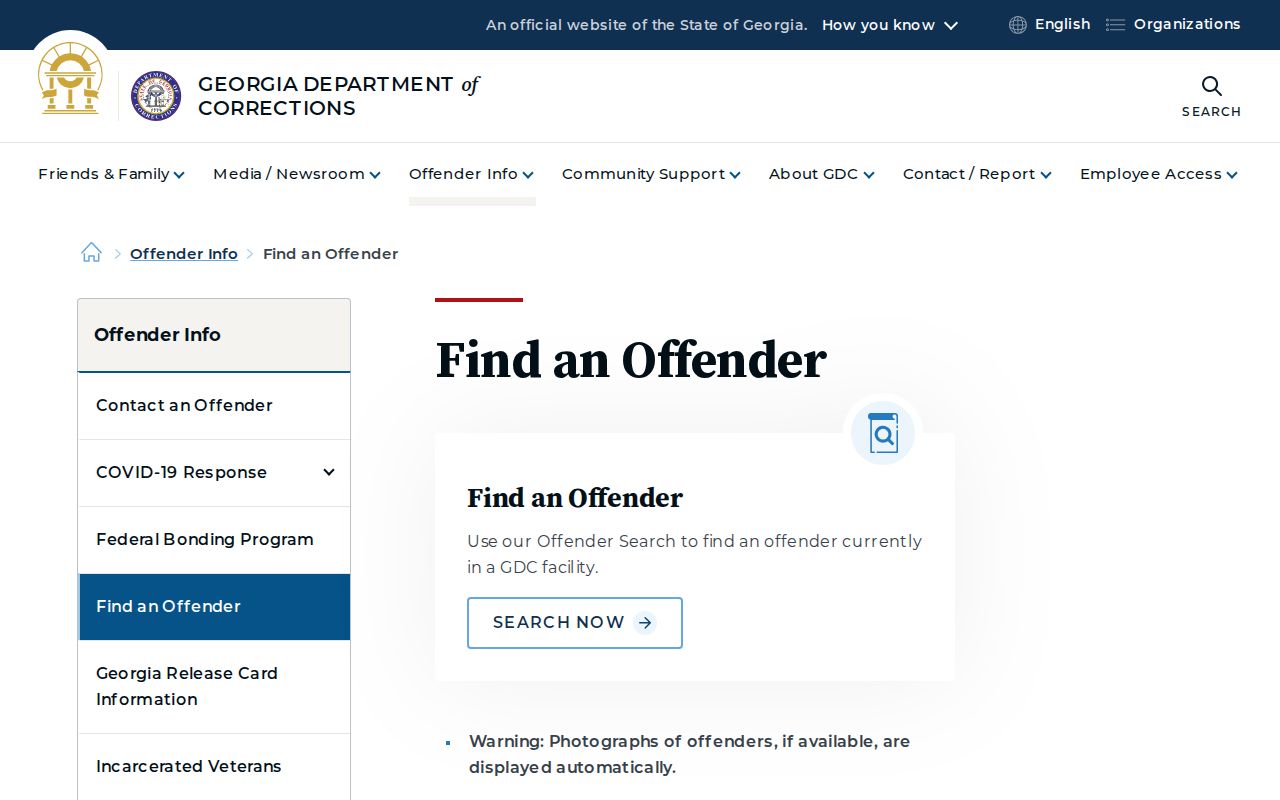
A state-prison profile is not a county booking entry, so check it against the right agency and court. Does a GDC photo show a current county booking? No. County systems record local bookings and jail status; the photo belongs to a state custody profile.
Secondary sites add another layer. Busted Newspaper, RecentlyBooked, Mugshots.com, Arrests.org, and Mugshots.zone each run Georgia sections with their own coverage and update rules. For news, The Georgia Gazette and Georgia Recorder report statewide, AJC, 11Alive, WSB-TV, and FOX 5 cover metro cases, and WALB, WTOC, and 13WMAZ work their regions. These outlets pick stories rather than log every arrest. Always confirm with the county and the court. The RecentlyBooked’s Georgia section shows a secondary index with a county list and an access challenge, not an official roster, and that gap matters when a vendor's visible coverage shifts.
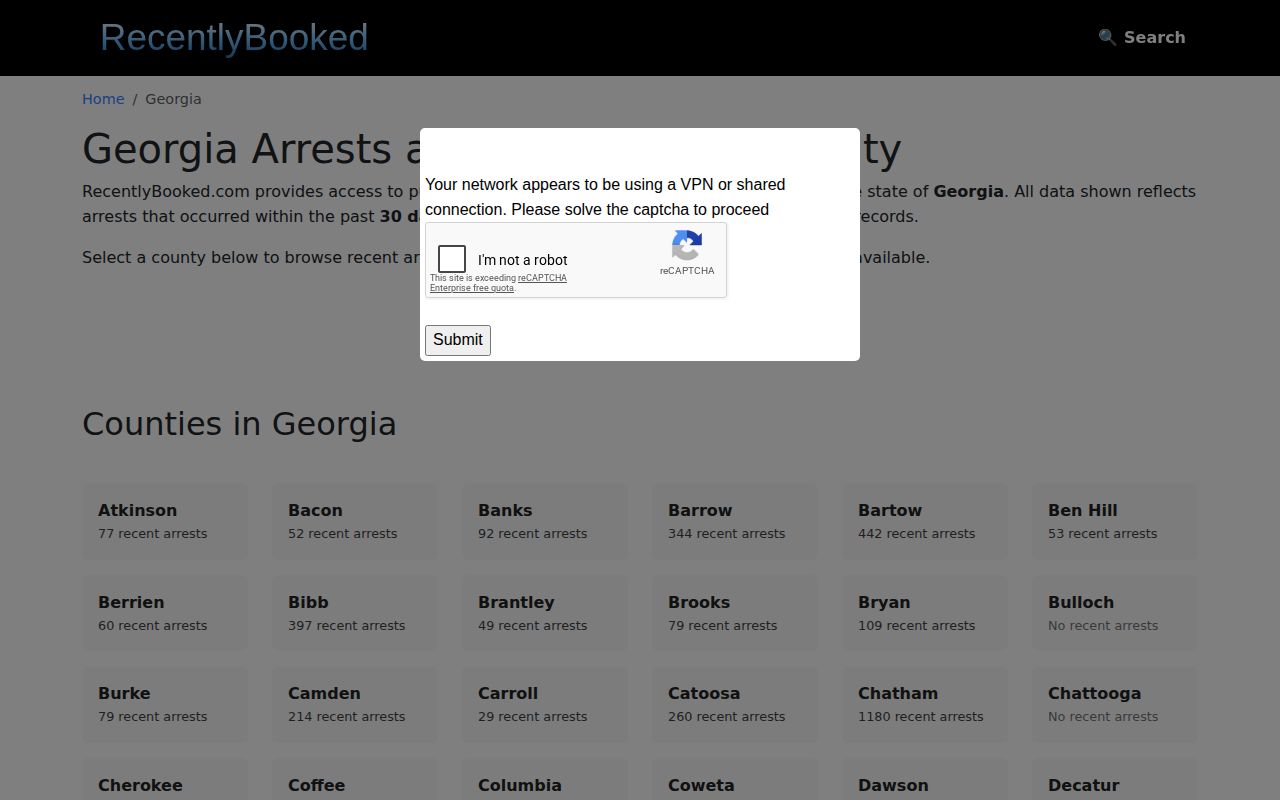
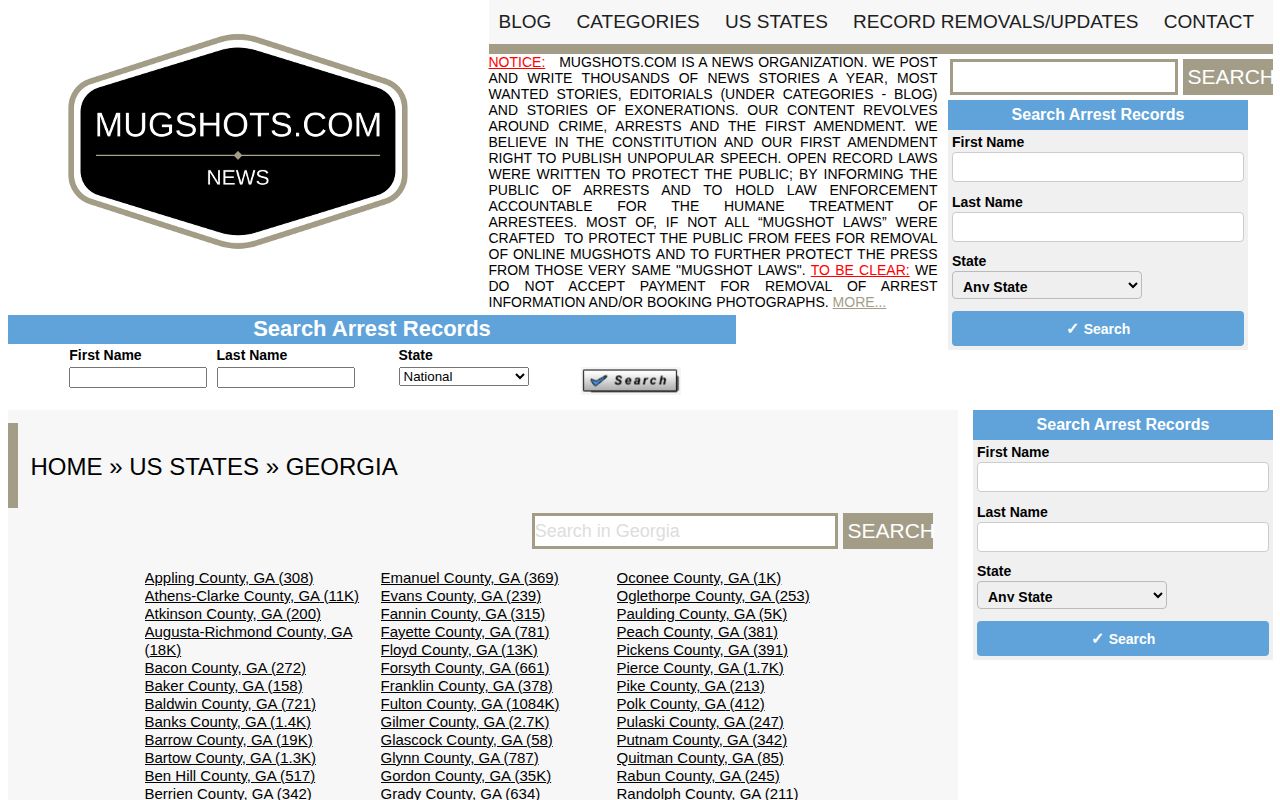
A blocked page or a missing county listing is not proof that the official record is absent. The Mugshots.com Georgia capture shows the publisher's search and policy context rather than an official Georgia booking system.
A private publisher's page is not the last word on an arrest; confirm with the arresting agency and the court. The Mugshots.zone About page describes a private multi-source database and how it says it maintains records.
A publisher's policy is not a court order restricting a government record. The Georgia Gazette’s Second Chance Policy lays out a free request path for certain documented circumstances. Even so, the publisher keeps discretion.
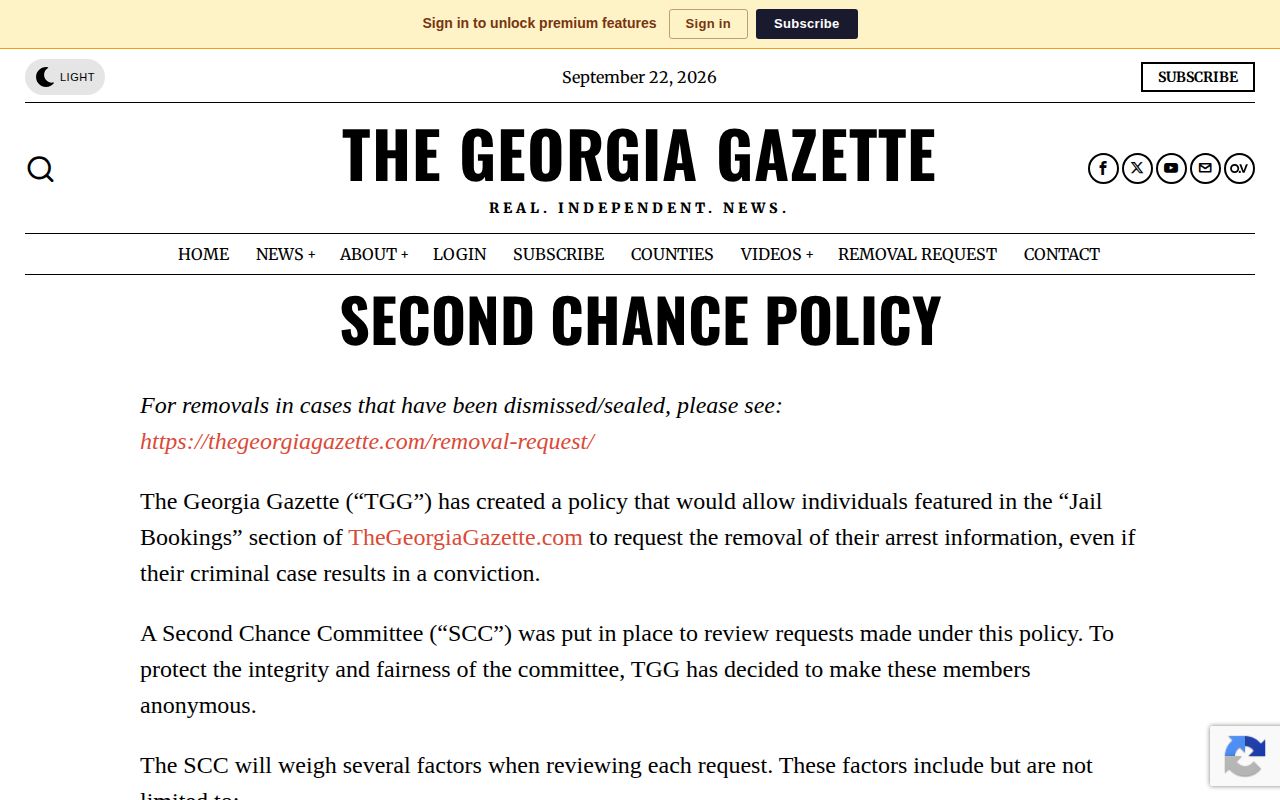
No newsroom policy changes what the court or agency holds. A selected news page never adds up to a complete statewide log. Correction routes differ from site to site. Busted Newspaper asks for documentation of listed case outcomes. RecentlyBooked, Mugshots.com, and Mugshots.zone each post their own free correction or record-maintenance policies. The Georgia Gazette accepts free Second Chance requests but keeps discretion. Arrests.org offers a contact route without a clear, stable statewide free policy. Georgia Recorder, AJC, 11Alive, WSB-TV, FOX 5, WALB, WTOC, and 13WMAZ publish selected regional reporting. They are not a custody feed. None of these private or editorial steps changes the official case result. None promises every copy will vanish.
Requesting Georgia Arrest Records
Georgia's Open Records Act covers records held by public agencies unless an exemption applies. A written request is usually the clearest route. It fixes the date, the record type, and the delivery method. It also names the custodian. Send it to the agency that actually holds the report. A county sheriff may hold the jail booking file. A city police department may hold an incident report. Georgia DPS may hold a GSP citation or incident report. Ask for an existing record, though. The law does not make an office build a statewide arrest list for you.
- Identify the county or arresting agency and the record custodian. Give the person's name, known arrest or booking date, facility or agency, and a narrow date range.
- Name the record wanted, such as a booking report, initial arrest report, charge sheet, or releasable photograph. Ask for an electronic copy if that format is available.
- For a booking photograph, follow O.C.G.A. § 35-1-19 and submit the required signed affirmation. The agency cannot provide the photo for a prohibited pay-to-remove publication purpose.
- Review the custodian's response, exemption explanation, fee estimate, and delivery timing. Georgia's general response framework is three business days; unusual volume, legal review, and redactions can extend production.
Fees follow a formula the Attorney General describes. Search and retrieval may be billed at the lowest-paid qualified employee's rate. The first 15 minutes are generally free. Copies can run up to 25 cents per page. Allowed media costs, mailing, or other fees may add to the total. Ask for a current estimate, since DPS and county fees may differ. The Attorney General’s written-request guide explains the next step. It shows how to direct a request to the public agency that holds a record.
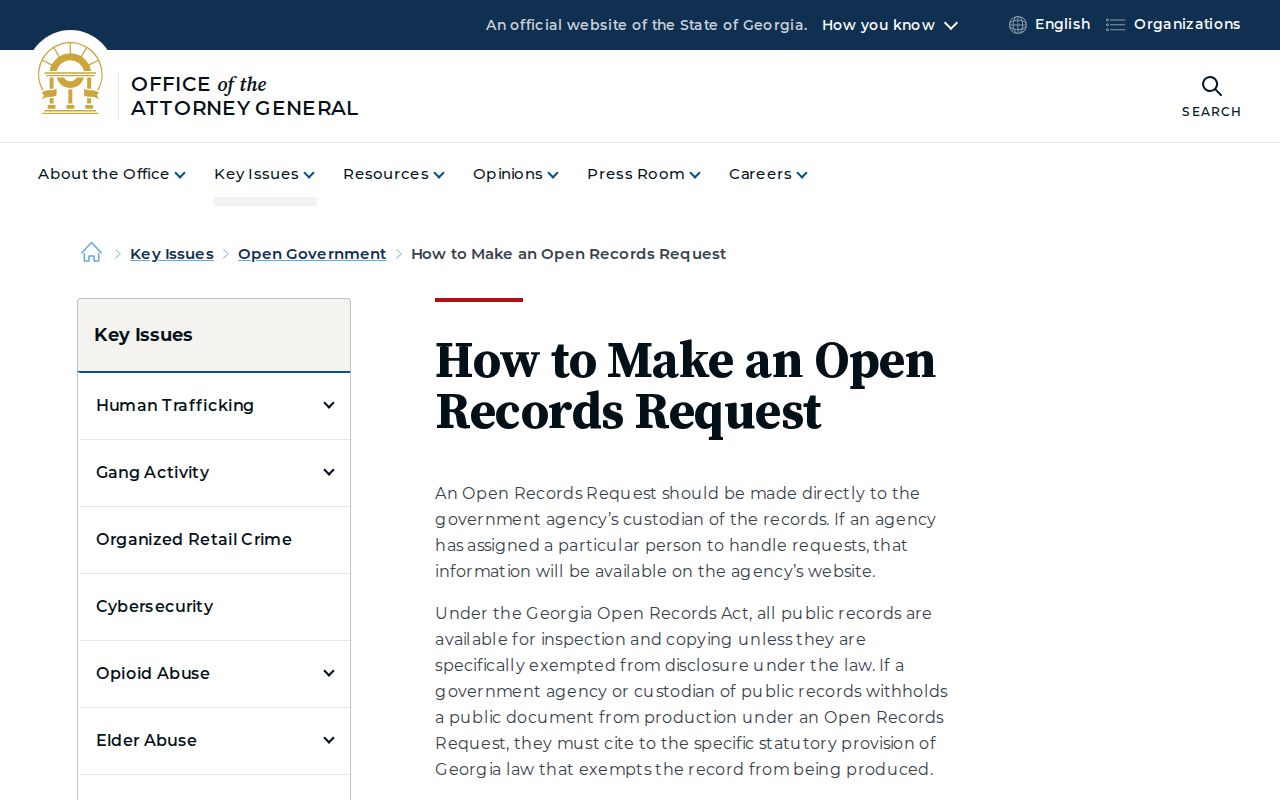
A request asks a custodian to locate a record that exists. It cannot force an office to create a statewide arrest list. Agency records, criminal-history data, jail rosters, court dockets, and GDC profiles each serve a different purpose. A short web window may close. The agency still keeps the record under an approved schedule. Georgia Archives lists one-year retention for incarceration lists. Inmate case files are kept ten years after release under the same body of rules. Those are series rules, not web-page lifespans. The Georgia Archives retention schedules lay out those record-series rules. The rules help separate a public feed window from records management.
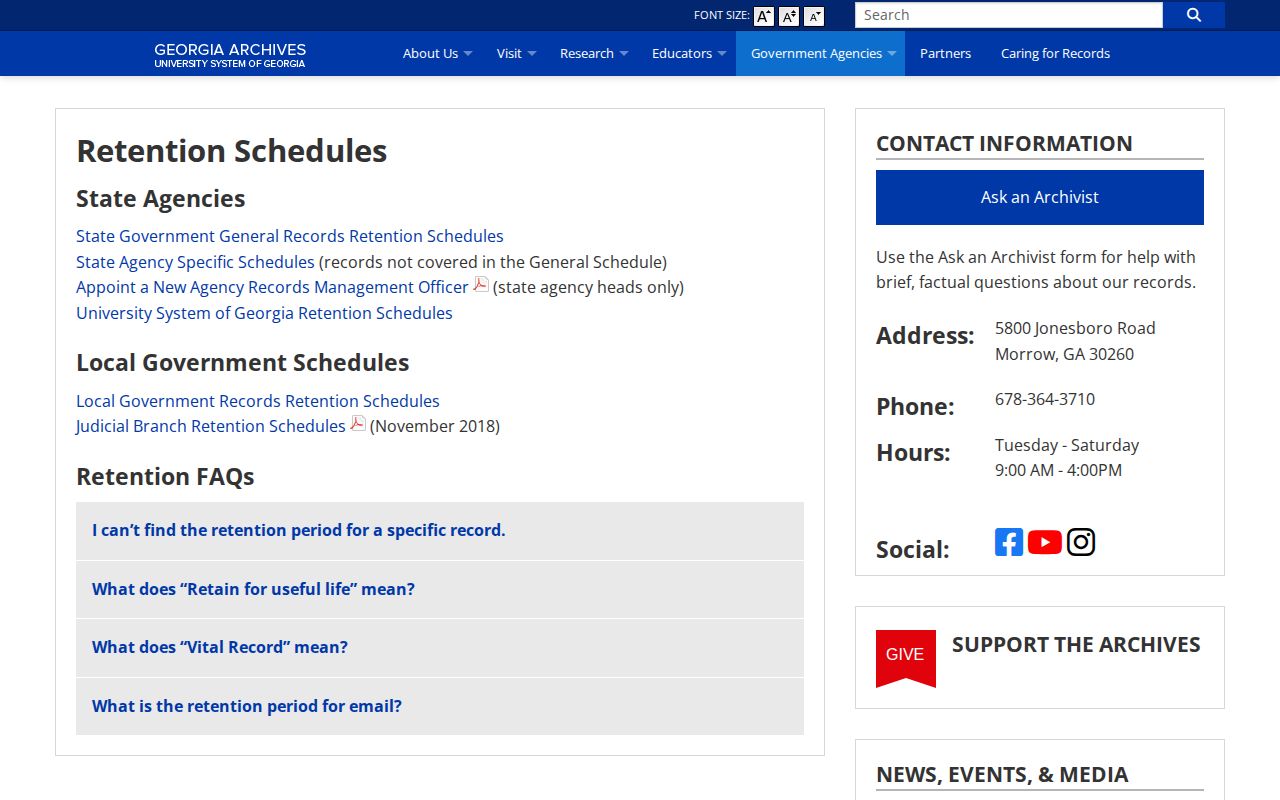
If the arrest record is older, ask the office whether it is still held locally, was transferred, was destroyed under schedule, or is restricted by law.
Note: The custodian can identify whether a record remains local, moved to archives, or was destroyed under an approved retention schedule.
Georgia Arrest Reports by Window
Two tools answer different questions. A same-day page shows fresh intake, while an arrest-date report reaches farther back and may include people already released. Neither one adds up to a complete history.
| Window | Typical Georgia Pattern | What to Confirm |
|---|---|---|
| Same day | “Last 24 Hours,” “today,” or a rolling vendor tab, depending on the county. | Read the local cutoff and refresh terms; use a records contact if the booking is new. |
| Multi-day | Arrest-date range, county blotter, or a selected news roundup. | Check the date fields, whether released entries remain, and the oldest available date. |
| Current custody | People listed as held at the most recent system update. | Do not treat a current list as a complete history of all arrests. |
County arrest logs can lag on weekends and holidays. A quiet screen may just mean delayed posting, a broken link, or a redesigned site, not that no arrest or record exists.
Georgia Arrest Record Law
Georgia's Open Records Act, O.C.G.A. §§ 50-18-70 through 50-18-77, opens arrest records to the public, with stated exemptions. A pending investigation alone does not make an initial arrest report private. Protected identifiers, juvenile material, medical details, and other exempt items may be withheld. Booking photos carry their own conditions under § 35-1-19. Juvenile records are generally confidential under § 15-11-708, with narrow exceptions.
What many people call expungement, Georgia calls record restriction. Restriction limits public access. It does not always destroy the record or every court, agency, vendor, or search-engine copy. The route turns on the arrest date and final disposition. Pre-July 2013 cases go through the arresting agency's older process. Later cases run through the prosecutor, with GCIC steps after approval. No single waiting period fits every case.
O.C.G.A. § 10-1-393.5 offers a free request path. It covers qualifying outcomes such as restriction, dismissal, no prosecution, acquittal, or completed conditional discharge. The Attorney General sets a firm rule. A compliant request must be handled within 30 days at no charge. Private copies and search caches can persist. Steer clear of anyone selling the statutory removal process.
The full picture of Georgia arrest record law and correction options sits on the Arrest Records Law page.
Georgia Warrants and Wanted Lists
Georgia has no single statewide warrant database. Each county handles its own. The official warrant guidance tells people to ask the sheriff or the court in the county where a warrant might exist. Offices differ in what they share. Some take phone requests, and others require a different process. A few will not confirm a warrant remotely. A lawyer or the clerk of the right court can explain safe ways to check. Walking in on a name match is never wise.
Statewide fugitive work runs through separate agencies. The GBI fugitives page covers the Southeast Regional Fugitive Task Force's metro Atlanta operations and offers a tip route. The U.S. Marshals Northern District page lists the task force and its participating agencies. Its national profiled-fugitives list is not a Georgia warrant certification. The Southern District page may show no profiles yet still list contacts. An empty page is not proof that no fugitive exists.
The Georgia Department of Corrections posts no general public absconder roster. Its offender search covers state custody, not every supervision matter. The State Board of Pardons and Paroles can issue warrants for parole violations. That process sits apart from a county warrant lookup.
For a local warrant question, start with the county or court that issued it. Confirm the person's identity, the date, and the agency holding the entry. If a public wanted notice names a tip method, send information to that agency. Never approach or confront anyone on a name match. Call 911 for immediate danger.
Note: A wanted notice is a lead from its agency; a similar name alone does not confirm identity.
What Follows a Booking
A booking opens an administrative record. The court case that follows may include arraignment, a bond decision, and a final disposition. At arraignment the judge states the charges and takes a plea. A bond amount, or a blank where one should be, does not guarantee release. A disposition might be dismissal, a plea, a conviction, nolle prosequi, or a dead docket.
Georgia Courts e-access lists participating providers rather than one free statewide docket. A missing case may need a call to the clerk. The paid Georgia Felon Search has its own scope and exclusions. It is not a same-day arrest feed. Never read a court outcome from a jail charge line.
After sentencing and transfer to state prison, the Georgia Department of Corrections search may show an ID, an institution, custody fields, and sometimes a photo. GDC warns that results can lag. The Bureau of Prisons covers federal inmates. It posts no photos. The ICE Online Detainee Locator handles a separate immigration-detention system. None of these replaces the county booking record.
- Booking
- The intake process that records a person's entry into a jail or detention system.
- Bond
- A court-set condition that may allow release while a case continues.
- Disposition
- The court's recorded result for a charge or case.
- Record restriction
- A legal process that limits public access to qualifying Georgia records; it does not always erase every copy.
A person may be released, transferred, or held on another matter while the public roster changes, and the court file and booking record can persist on different schedules.
The Georgia Courts e-access provider route can help locate a participating court record after an arrest.
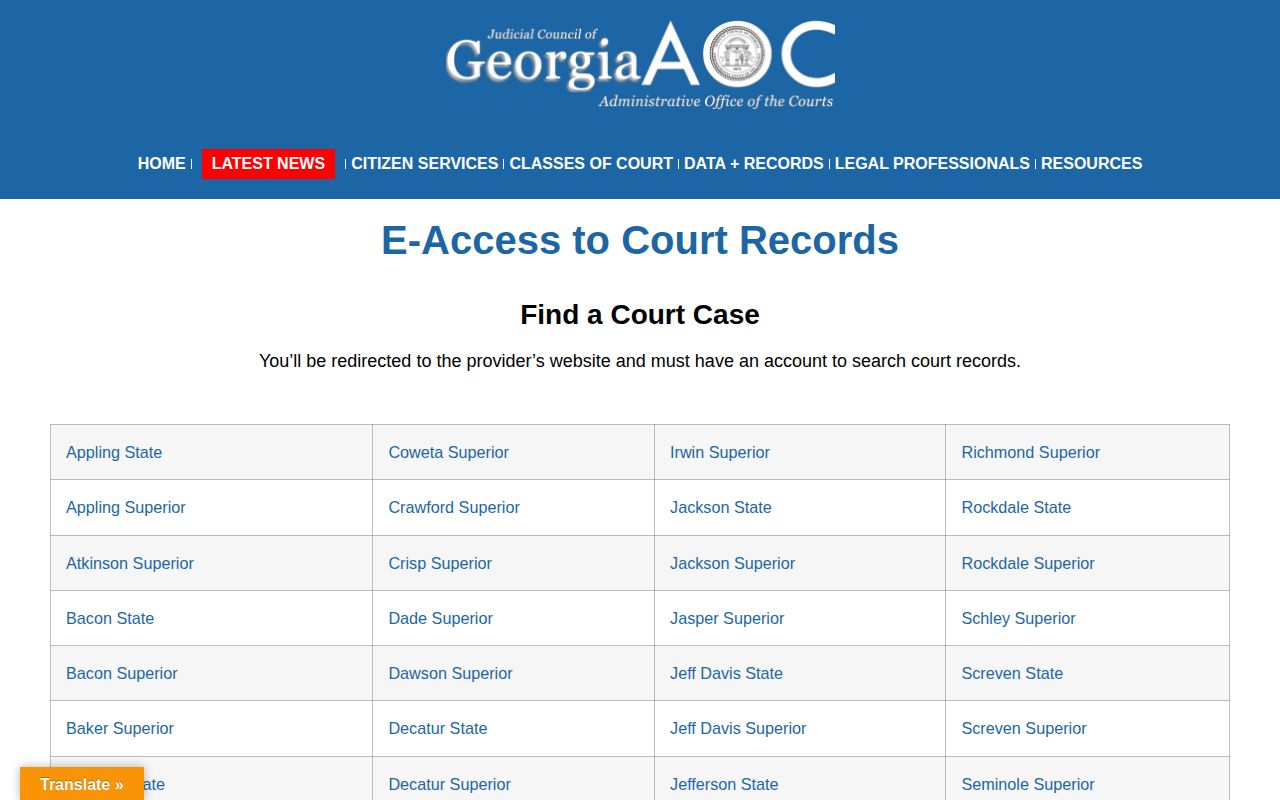
Provider coverage varies. An online search may still need a clerk request behind it.
The Bureau of Prisons locator shows the separate federal custody path and includes no inmate photos.
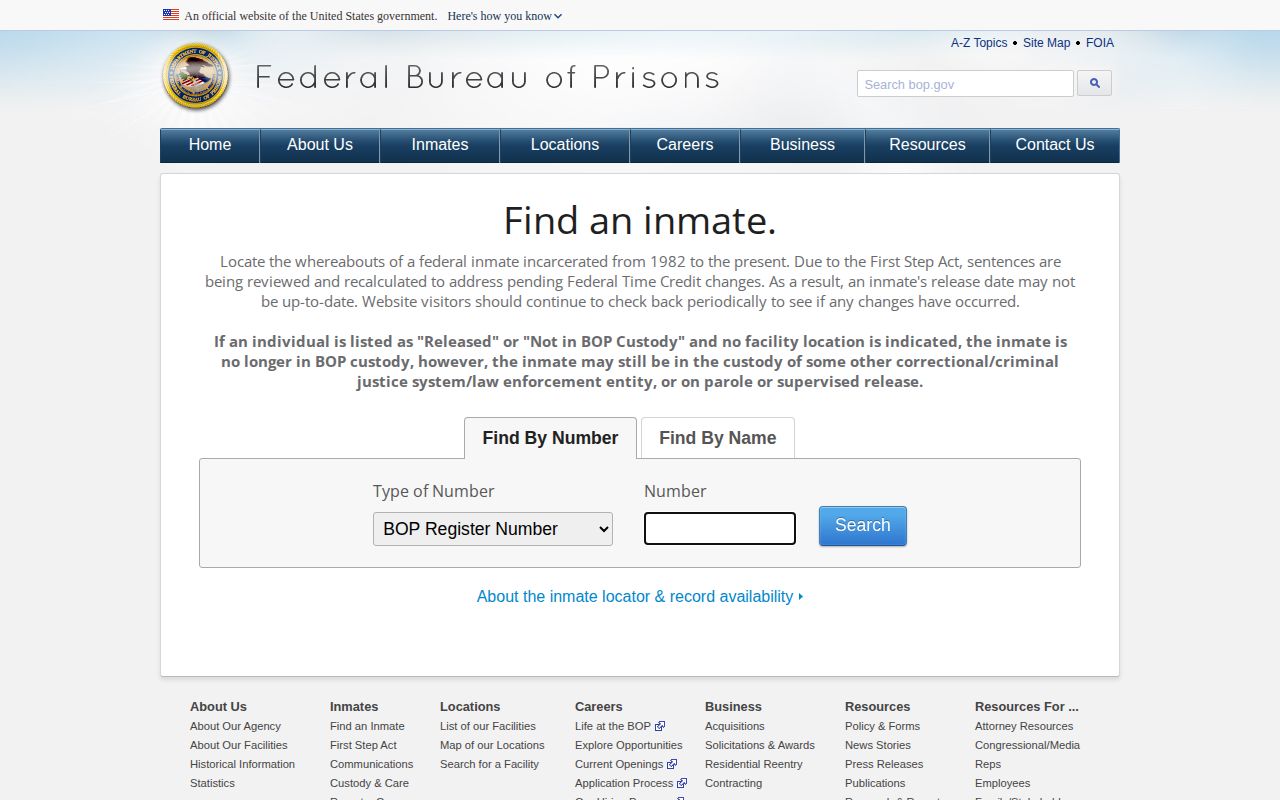
A federal result is not the same thing as a county jail booking or a Georgia court disposition.